



The Hidden Cost of Winter Stress on Women’s Hormones
By February, many women are running on depleted reserves.
January motivation fades.
Sunlight is still limited.
Stress remains high.
And this is when hormone symptoms often intensify.
If you’ve noticed:
- Shorter cycles
- Heavier bleeding
- PMS worsening
- Breast tenderness
- Increased anxiety
- More sugar cravings
- Afternoon crashes
It may not be “hormone imbalance” in isolation. It may be nervous system fatigue.
Your reproductive hormones do not operate independently. They respond directly to stress signaling from the brain — specifically the hypothalamus.
When the brain perceives threat (physical, emotional, financial, relational), it prioritizes survival over reproduction.
This shifts signaling along the HPA axis (hypothalamic-pituitary-adrenal axis).
Chronic stress can:
- Suppress progesterone production
- Increase estrogen dominance symptoms
- Elevate cortisol
- Disrupt blood sugar stability
- Alter thyroid signaling
And winter amplifies this.
Less sunlight affects:
- Melatonin production
- Circadian rhythm alignment
- Vitamin D levels
- Mood regulation
This creates a cascade.
Many women try to “push through” February.
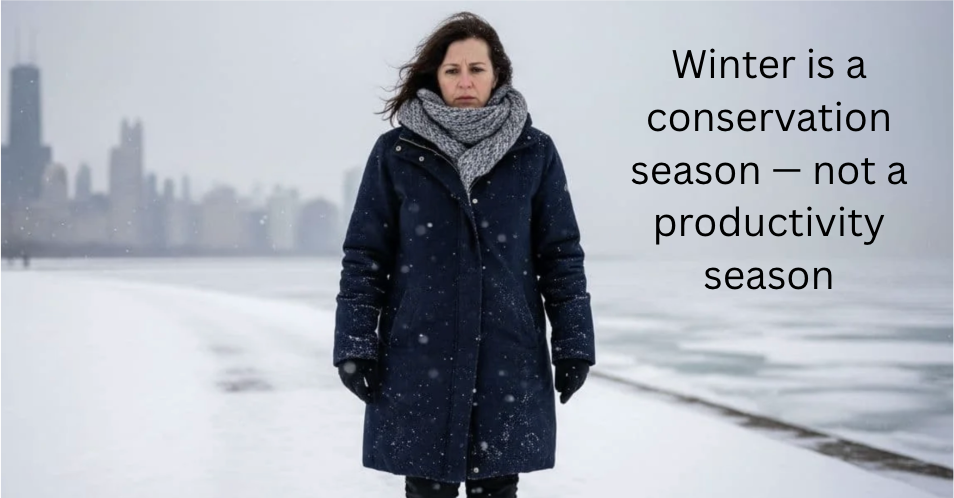
But physiologically, this is a season that asks for conservation.
Your body is not meant to operate at peak productivity year-round.
In traditional health systems, winter is a restorative season. A time to:
- Sleep more
- Eat warming, nourishing foods
- Simplify commitments
- Reflect inward
Instead, modern culture demands output.
So what supports hormones right now?
- Protein within 60 minutes of waking
- Morning light exposure (even on cloudy days)
- Warm, mineral-rich meals
- Magnesium for nervous system regulation
- Earlier bedtime
- Reducing inflammatory inputs (sugar, alcohol, excess caffeine)
Small rhythms stabilize big systems.
Your hormones are not failing. They are adapting.
If you feel more sensitive this time of year, that may be intelligence — not weakness.
Honor winter. Your body will thank you in spring.