



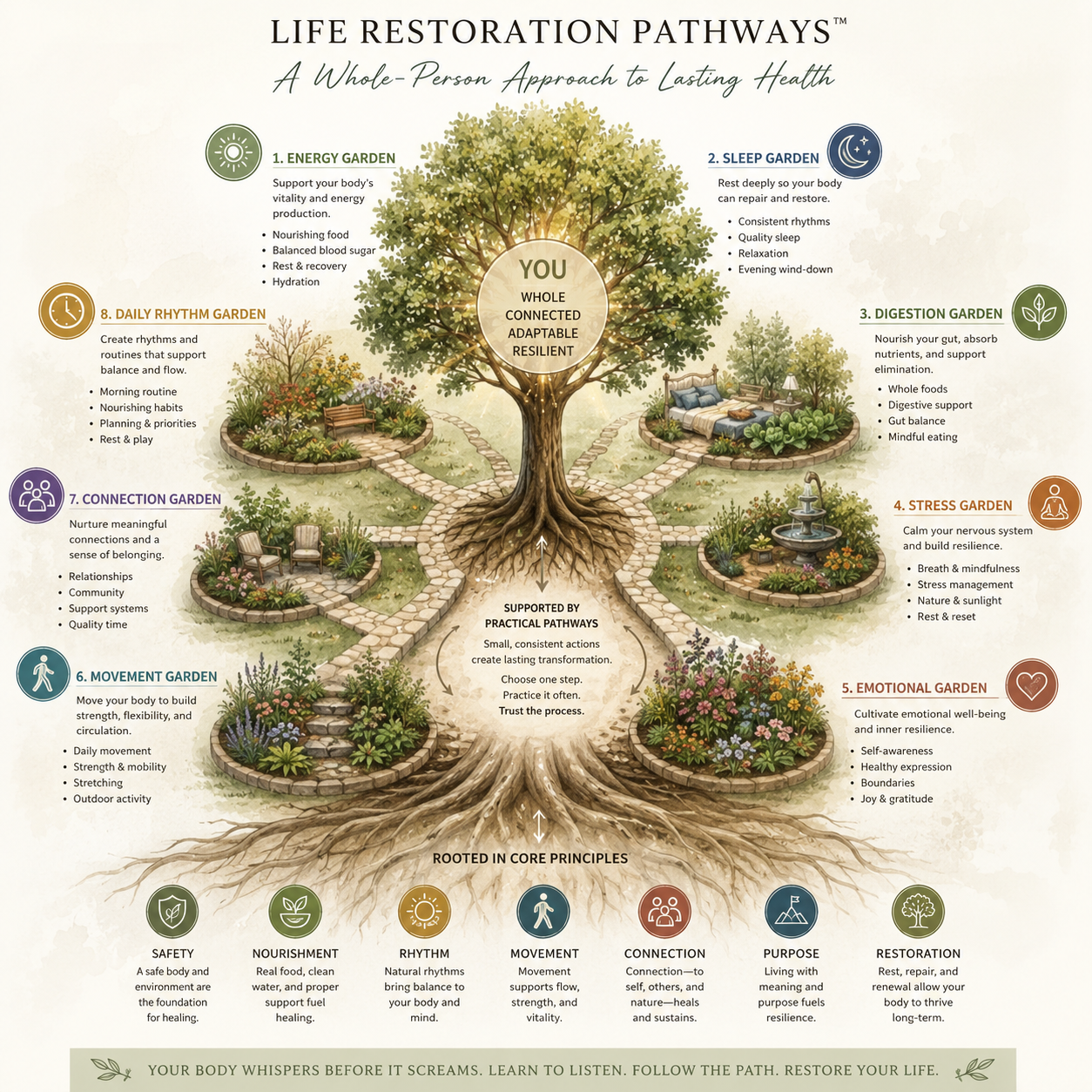
The Eight Restoration Gardens: Finding Where to Begin
When people first begin their healing journey, they often feel overwhelmed.
They’re trying to improve their nutrition, take the right supplements, exercise more, sleep better, reduce stress, drink more water, heal their gut, balance their hormones…the list seems endless.
Instead of feeling hopeful, many feel stuck. “I don’t even know where to begin.”
If you’ve ever felt that way, you’re not alone. One of the greatest misconceptions about healing is believing you have to fix everything all at once. Nature teaches us something very different.
Imagine your life as a beautiful garden. A healthy garden isn’t cared for by watering every plant every hour. The gardener simply walks through the garden each day, noticing what needs attention. Some plants are thriving. Others may need water, nourishment, pruning, or simply more time.
Your health works much the same way. Rather than seeing your body as a collection of unrelated symptoms, I encourage people to think of it as Eight Restoration Gardens—each one representing an important part of whole-person health.
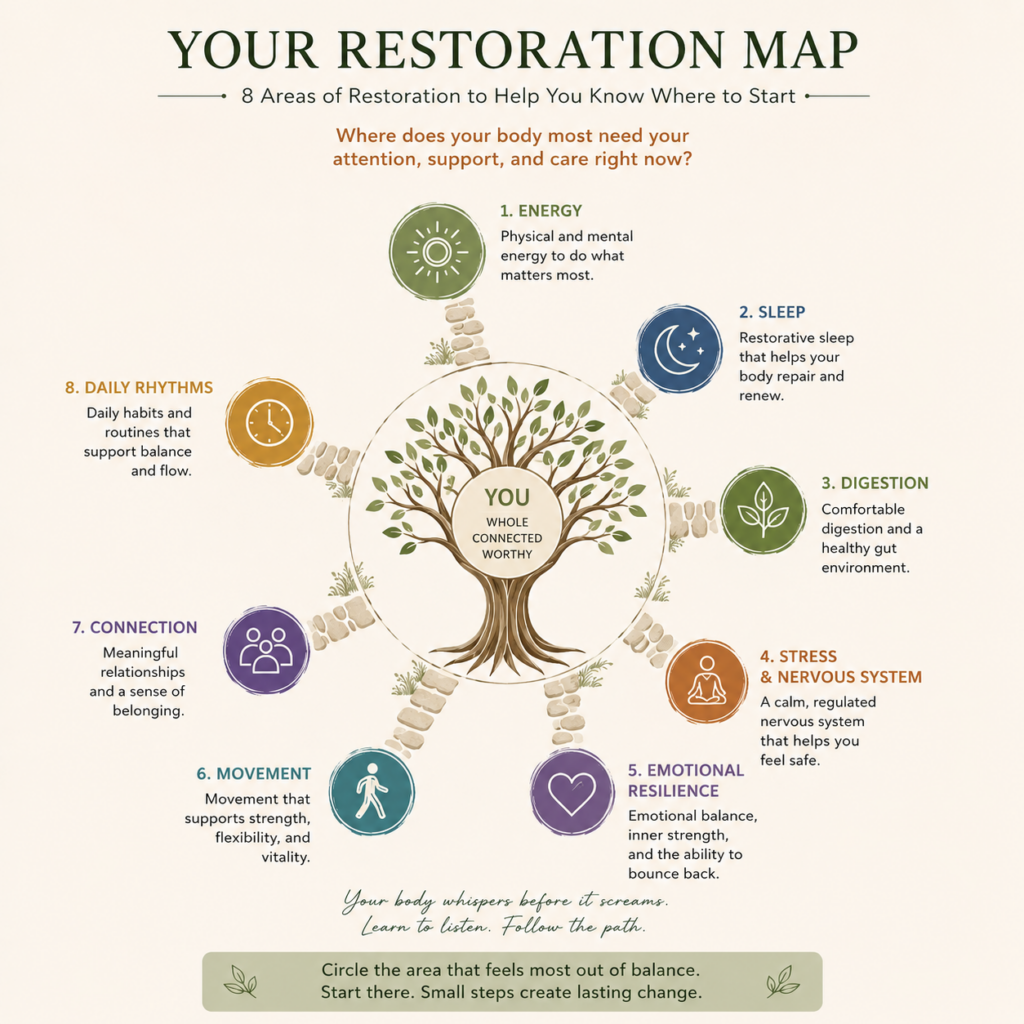
Energy
Energy is more than simply making it through the day. Healthy energy allows you to think clearly, enjoy your relationships, complete meaningful work, and still have something left for yourself. Persistent fatigue is often one of the first whispers that your body is asking for support.
Sleep
Sleep is where much of your body’s restoration takes place. During quality sleep, your brain processes information, hormones are regulated, tissues repair, and your nervous system has an opportunity to recover. Restoration becomes much more difficult when sleep is consistently disrupted.
Digestion
Your digestive system does far more than process food. It absorbs nutrients, supports your immune system, communicates with your brain, and helps regulate inflammation throughout the body. A healthy gut nourishes every other garden.
Stress
Stress itself isn’t the problem. Our bodies were designed to handle challenges. The difficulty comes when stress never truly ends. Learning to calm the nervous system and create moments of safety gives the body permission to shift from protection into restoration.
Emotional Health
Our emotional lives and our physical health are deeply connected. Unprocessed emotions, chronic worry, grief, or unresolved trauma can quietly influence the nervous system, sleep, digestion, and energy. Healing includes caring for both the body and the heart.
Movement
Movement isn’t simply exercise. It’s one of the ways we remind the body that it was created to move with strength, flexibility, and purpose. Sometimes healing begins with a walk around the block rather than an intense workout. Small, consistent movement often creates lasting change.
Connection
We were never designed to heal in isolation. Supportive relationships help regulate our nervous system, reduce stress, and remind us that we don’t have to carry life’s burdens alone. Sometimes one meaningful conversation becomes an important step toward restoration.
Daily Rhythm
Nature follows rhythms. The sun rises and sets. The seasons change. Our bodies also thrive on healthy rhythms—regular meals, restful sleep, movement, time outdoors, work, and periods of restoration. Small daily habits repeated consistently often have a greater impact than dramatic changes that only last a few weeks.
Choose One Garden
When people see these eight gardens together, they sometimes ask, “Which one should I work on first?”
My answer is almost always the same. Choose the garden that needs the most care today.
Not forever. Not all eight at once. Just today.
Perhaps your sleep has been neglected. Maybe stress has crowded out everything else. Perhaps your digestion has been asking for attention for months. Begin there.
As you care for one garden, you’ll often notice the others beginning to flourish as well. Better sleep improves energy. Less stress supports digestion. Gentle movement lifts mood. Healthy rhythms strengthen nearly every system in the body.
Healing is more about paying attention than about perfection.
One garden.
One small step.
One day at a time.
Your body isn’t asking you to become perfect overnight.
It is simply inviting you to become a faithful gardener—learning to notice, nurture, and care for the life you’ve been given.
Because restoration doesn’t happen all at once. It grows.