



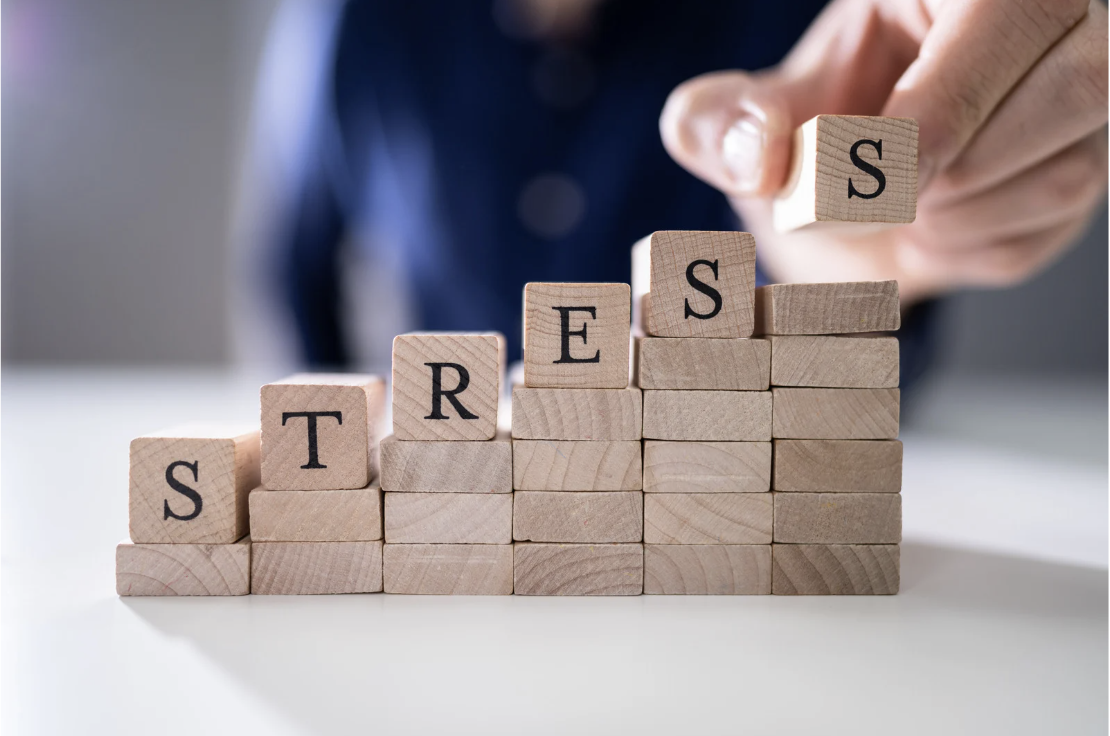
April is Stress Awareness Month, but most conversations about stress miss something important. Stress isn’t just what’s happening in your life—it’s what your body is holding, processing, and trying to adapt to, often without enough support. And for many people I work with, the issue isn’t that they’re “too stressed.” It’s that their body has been in a constant state of adapting for far too long.
Stress is not just emotional overwhelm. It’s a physiological response—your body’s way of keeping you safe. There are different types of stress, and most people are experiencing several at once: short-term stress from deadlines or difficult conversations, ongoing stress from work, trauma, or illness, physical stress from lack of sleep or inflammation, chemical stress from toxins or medications, and emotional stress from worry or overthinking. Your body doesn’t separate these. It adds them together. That’s what I call your total stress load.
When that load gets too high for too long, your body shifts into survival mode. This isn’t something you choose—it’s something your body does to protect you. But staying there has consequences. Your nervous system remains in a fight-or-flight state, even when nothing is immediately wrong. Your hormones, especially cortisol, begin to shift—first rising to help you cope, then becoming dysregulated over time. This is where people start to feel exhausted, have blood sugar swings, and struggle with sleep. Your body starts prioritizing survival over healing, which means repair processes get pushed to the side.
One of the first places this shows up is in the gut. When your body senses stress, it redirects energy away from digestion. Stomach acid can decrease, digestion slows, and nutrient absorption becomes less efficient. Over time, this can lead to bloating, food sensitivities, irregular bowel movements, and increased inflammation. This isn’t your body failing—it’s your body making a decision to keep you safe.
Your immune system is also deeply affected by stress. In the short term, stress can activate immune responses. But over time, chronic stress creates imbalance. Some people find they get sick more often, while others experience the opposite—an overactive immune response that shows up as inflammation or autoimmune patterns. The system loses its ability to respond appropriately.
At the center of all of this is the nervous system, and one of the key players is the vagus nerve. This is your body’s pathway into rest, digestion, and healing. When stress is constant, vagal tone decreases. You may notice shallow breathing, digestive issues, anxiety, or difficulty relaxing. Supporting this system isn’t optional—it’s foundational.
Stress also shapes how you think and feel. Anxiety, irritability, brain fog, low mood, and that “wired but tired” feeling are all common when the nervous system hasn’t had a chance to reset. This isn’t a lack of discipline or willpower. It’s a body that has been working overtime without enough recovery.
The goal isn’t to eliminate stress. That’s not realistic, and it’s not necessary. What actually helps is increasing your capacity to move through stress. That starts with your nervous system. Small, consistent signals of safety—like slowing your breath, stepping outside for a few minutes, or pausing between tasks—can begin to shift your physiology. Supporting your body is just as important. Eating regularly, staying hydrated, and maintaining a consistent sleep rhythm give your system the resources it needs to regulate.
It’s also important to look at the invisible load you’re carrying. Overcommitment, constant input from news or social media, and unspoken expectations all add to your stress, even if they don’t seem obvious. Creating a gentle daily rhythm—not a rigid routine, but a supportive flow—can help your body feel more stable. Simple practices like humming, gargling, cold water on your face, or slow breathing can directly support the vagus nerve and signal safety.
And just as important is how you speak to yourself. Many people are running an internal dialogue of “I should be doing more” or “I’m behind.” Shifting that to “What does my body need right now?” or “What is enough for today?” begins to change your relationship with your body, and that’s where healing starts.
Stress isn’t your enemy. It’s information. It’s your body saying, “I’ve been adapting for a long time. I need support now.” The goal isn’t to push through—it’s to come back into alignment. Because when your body starts to feel safe again, everything else—digestion, immunity, energy, clarity—begins to follow.
This week, instead of asking how to reduce your stress, try asking where you can support your body more. That’s where healing begins.