


Which Direction Are You Facing on the Wellness Continuum?
There’s a place on the wellness continuum that many people know well. The pain has eased. The test results look better. The immediate problem has been treated. Yet when someone asks, “How do you feel?” the honest answer is, “I still don’t feel like myself.”
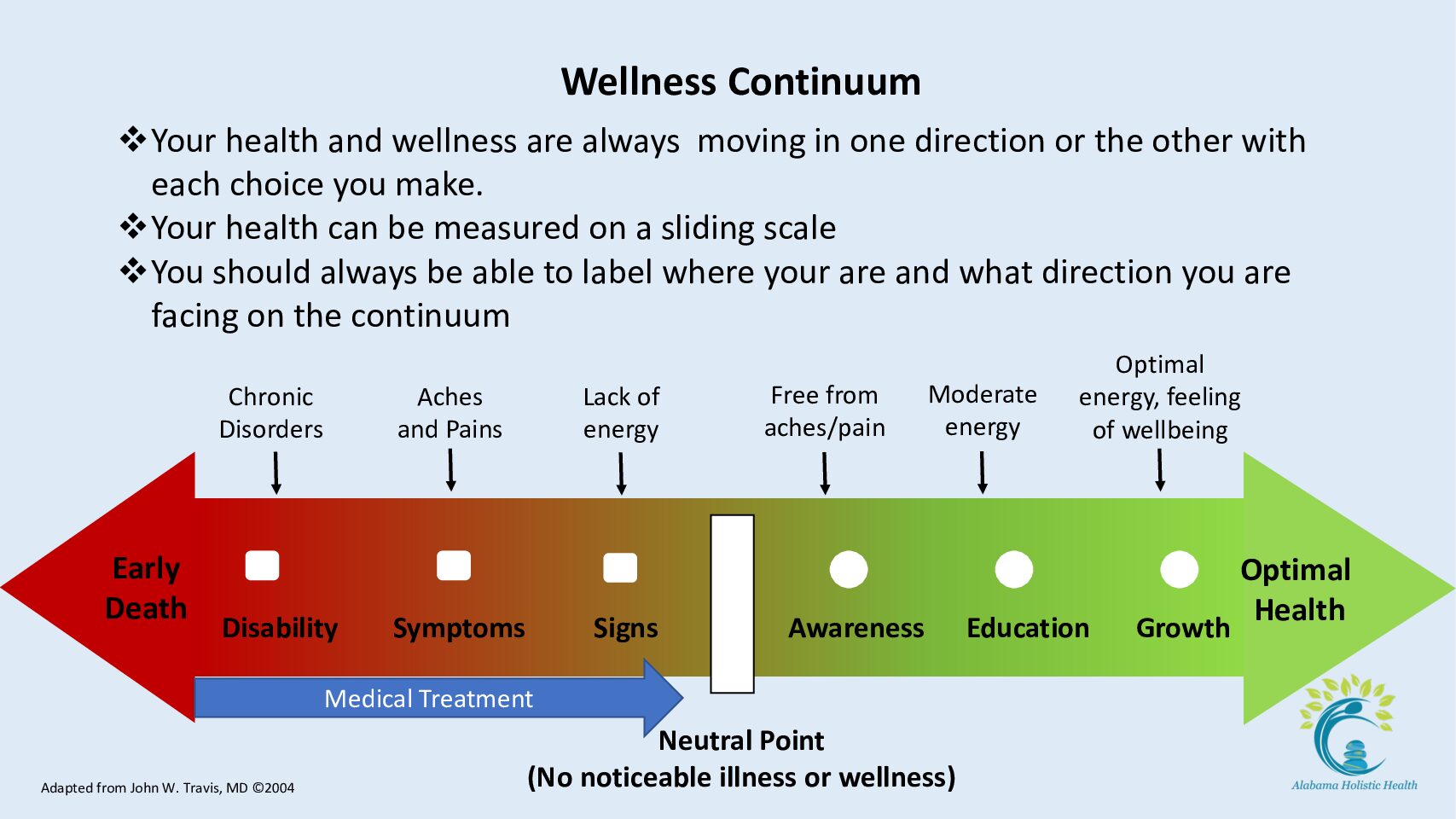
That middle place matters. On the wellness continuum, it is labeled the neutral point: no noticeable illness or wellness. From there, the path toward greater well-being continues through awareness, education, and growth.
I want people to notice that the arrow keeps going.
Medical care can be essential. It can also improve comfort, function, and quality of life. But wherever treatment brings you, you can still ask a larger question: What would help me live as well as I can from here? Health includes more than the absence of illness; it includes how we are doing physically, mentally, and socially.
For one person, the next step may be rebuilding energy after a long illness. For another, it may be sleeping more consistently, feeling connected to other people, or having enough strength to enjoy an ordinary afternoon. Those steps may happen alongside medical treatment. They may also look different as our health and circumstances change.
The direction you’re facing
The continuum asks us to notice where we are. I think it also invites us to ask which direction we’re facing.
When you’re dealing with a serious diagnosis, pain, or exhaustion, your attention can become fixed on what might happen next. That is understandable. Fear deserves compassion. And sometimes, even in the middle of that fear, we can turn toward something that gives life meaning today: a conversation, time outdoors, relief from pain, or a visit with someone we love.
My father taught me something about this when he had terminal cancer. He told me he wanted to look toward as much life as he could. He knew his illness was terminal, and he still wanted to pay attention to the life in front of him.
His doctor doubted he would live three months. My father lived six. I don’t know that his attitude gave him those additional months, and I would never tell someone that an attitude determines how long they live. What stays with me is the way he chose to spend the time he had.
Facing life can mean receiving treatment and asking for help. It can mean making room for grief, too. A person does not have to feel positive every day to move toward well-being, and illness is never a failure of attitude. Research has found no convincing evidence that a person’s attitude determines whether they survive cancer. Supportive care can, however, help people with serious illness feel more comfortable and improve their quality of life.
A question to return to
Take a look at the continuum and ask yourself: Where am I today? Then ask: What would moving toward greater well-being look like for me right now?
Your answer might be more energy. It might be less pain, more support, a steadier daily rhythm, or the freedom to enjoy something you thought you had lost. If you are living with an illness that will not go away, your answer might be comfort, connection, and meaningful time.
You can return to these questions throughout your life. The continuum is a way to notice change over time and choose a next step that fits the life you are living now.