




When Treatment Ends but Recovery Continues: Supporting the Body’s Rebuilding Season
The appointment is over. The procedure is complete. The infection has cleared, the medication course has ended, or the test results look better. Everyone expects life to return to normal—and yet you still feel tired, foggy, emotionally thin, or less resilient than you were before.
That gap can be confusing. You may wonder whether you are failing to recover, especially when the most visible part of the problem has improved. Often, however, the body is not failing. It has simply entered a different phase of healing: rebuilding what the illness, prolonged stress, or treatment required it to spend.
Stabilization Is Not the End of the Wellness Continuum
Medical care plays an essential role in identifying illness, treating disease, reducing immediate risks, and helping the body move out of crisis. On the wellness continuum, this care often helps move a person away from disability, symptoms, and measurable signs of illness toward a neutral point—a place where there may be no obvious illness or immediate medical danger.
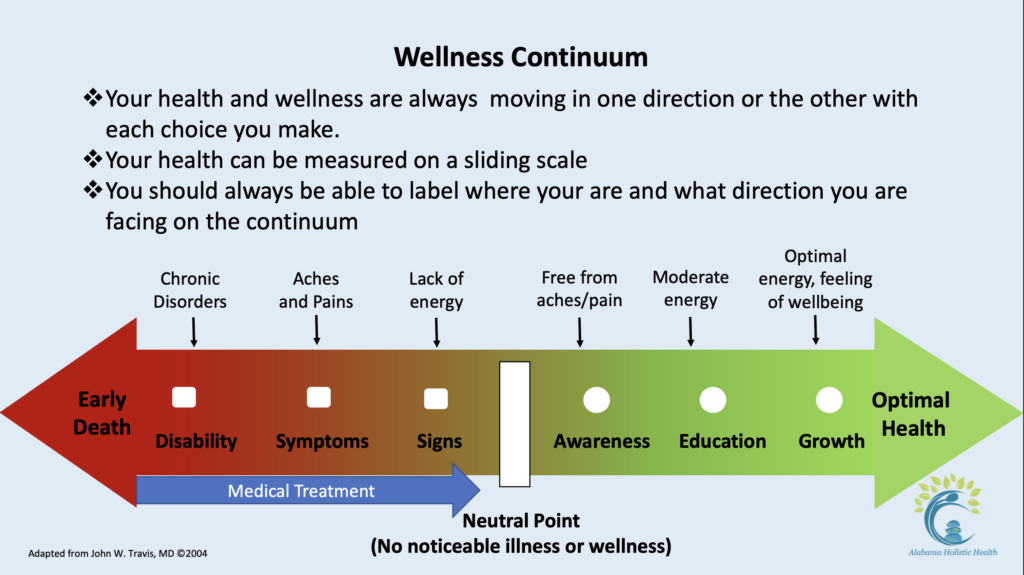
Reaching that point matters. It may even be lifesaving. But the center of the continuum is not the same as optimal health.
The absence of a diagnosable disease does not automatically mean that energy has returned, digestion is working well, sleep is restorative, or the nervous system feels safe. A person may be medically stable and still experience fatigue, brain fog, pain, digestive changes, poor sleep, anxiety, or a reduced ability to tolerate everyday stress.
Real health continues beyond stabilization. On the restorative side of the continuum are greater awareness, education, growth, resilience, energy, and an increasing sense of well-being. The focus begins to shift from controlling a crisis to rebuilding the person who lived through it.
Medical care and restorative care do not have to compete with one another. They answer different questions. Medical care may ask, “How do we control the infection, correct the problem, or reduce the immediate risk?” Restorative care asks, “What has this person’s body been through, what capacities have been depleted, and what support may help those systems begin functioning more fully again?”
Why the Body May Need Time to Rebuild
During illness, injury, trauma, or prolonged stress, the body directs its resources toward immediate survival. Sleep may become fragmented. Appetite and digestion may change. Movement often decreases. Stress hormones remain elevated, and the nervous system becomes more watchful. Medications and procedures may be necessary, but they can also add new demands that the body must process.
Even familiar routines may disappear because getting through the day becomes the priority.
When the crisis passes, these systems do not always reset automatically. The test results may improve before your strength returns. A wound may heal before your confidence does. Pain may decrease while your nervous system continues preparing for it. Treatment may be complete while digestion, sleep, energy, and emotional resilience are still trying to find their rhythm.
This is the rebuilding season. It is quieter than crisis care, but it still counts as healing.
Rebuilding Energy and Cellular Resources
Fatigue is one of the most common signs that stabilization and restoration are not the same thing. The body may have used tremendous resources to respond to infection, inflammation, surgery, emotional stress, pain, disrupted sleep, or reduced nourishment. Even after the primary problem improves, the body may still be trying to replenish those reserves.
Rebuilding energy usually requires more than pushing through exhaustion. It begins by looking at the whole pattern: meal regularity, protein and plant intake, hydration, sleep, movement, stress, medications, digestion, and relevant medical findings. Health coaching can help turn those observations into manageable changes rather than an overwhelming new routine.
BioScan biofeedback may also be used as an informational wellness tool to identify patterns of stress and areas that deserve further attention. It does not diagnose disease or replace medical testing, but it may help guide better questions and support a more individualized plan.
Pulsed Electromagnetic Field Therapy, or PEMF, may be incorporated when medically appropriate to support relaxation, physical comfort, circulation, and recovery. For some people, reducing physical tension and discomfort makes it easier to sleep, move, and participate in the daily activities that gradually rebuild capacity.
The goal is not to create a temporary burst of energy. It is to help the body develop a more sustainable foundation for producing, conserving, and using energy.
Persistent fatigue should still be medically evaluated, especially when it is severe, worsening, or accompanied by breathlessness, chest pain, fainting, fever, unexplained weight changes, bleeding, or new neurological symptoms.
Restoring Digestion and Absorption
Eating nutritious food is only one part of nourishment. The body must also be able to break food down, absorb its nutrients, transport them, and use them.
This process depends on cooperation among the brain and autonomic nervous system, stomach acid, pancreatic enzymes, bile, intestinal movement, the intestinal lining, the microbiome, and blood and lymphatic circulation. When one or more parts of that process are disrupted, a person may eat well and still struggle to receive the full benefit.
Illness, medication, chronic stress, pain, inactivity, and changes in routine can all affect digestion. Some people notice constipation, diarrhea, reflux, bloating, nausea, poor appetite, or new food sensitivities after treatment. The answer is not always to eliminate more and more foods. Sometimes the more useful question is, “What does the digestive process need in order to function more effectively?”
Health coaching can help explore meal timing, hydration, food variety, bowel patterns, stress responses, and the foods that are currently easiest to tolerate. BioScan biofeedback may contribute additional wellness information, while appropriate laboratory testing can help identify concerns that require medical evaluation.
When indicated, supplements may be used to support identified needs. They should be selected thoughtfully, with attention to medications, health conditions, tolerance, and available clinical information. More supplements are not necessarily better; the goal is to use the right support for the right person at the right time.
Because digestion and the nervous system continually communicate, auriculotherapy may also be incorporated to support relaxation and nervous-system regulation when stress appears to be contributing to digestive symptoms.
Re-establishing Sleep and Daily Rhythm
The body performs much of its repair work during sleep, but spending more hours in bed does not guarantee that sleep will be restorative. Pain, worry, medication timing, blood-sugar fluctuations, hormonal changes, breathing problems, digestive discomfort, and nervous-system activation can all interrupt the body’s ability to settle.
Re-establishing rhythm often begins with simple, repeated cues: a reasonably consistent wake time, exposure to morning light, regular meals, appropriate daytime movement, and a calmer transition into the evening. Health coaching helps shape these practices around the person’s actual life rather than expecting a perfect routine.
Auriculotherapy may be used to support relaxation, stress regulation, and healthier sleep patterns. Hypnotherapy, guided imagery, and other focused-attention practices can help quiet mental overactivity and give the nervous system repeated experiences of settling. PEMF may also support relaxation and physical comfort when pain or tension is interfering with rest.
BioScan biofeedback can help us look for broader wellness patterns involving stress, energy, and sleep. It may guide the conversation, but ongoing sleep problems still deserve appropriate medical investigation.
Snoring, gasping, restless legs, severe insomnia, or excessive daytime sleepiness should not be dismissed as something you simply need to manage better. These symptoms may point to an untreated sleep disorder or another concern requiring medical evaluation.
Expanding Nervous-System Capacity
A body that has spent weeks or months monitoring symptoms may remain watchful after the immediate threat has passed. You may feel jumpy, irritable, detached, tearful, easily overwhelmed, or unable to settle. A new sensation may immediately trigger fear that the illness is returning.
These responses do not mean the symptoms are imaginary. The nervous system is part of the body, and it learns from repeated experiences of pain, trauma, uncertainty, medical procedures, and loss of control.
Restoring nervous-system capacity is not about forcing yourself to relax or think positively. It is about providing small, repeated experiences that help the body recognize that it does not have to remain in constant protection mode.
Integrative psychotherapy can help address trauma, grief, anxiety, health-related fears, and the emotional weight of living with persistent symptoms. Hypnotherapy and Neuro-Linguistic Programming can be used to work with learned responses, strengthen internal safety, and rehearse calmer ways of responding to future situations.
Auriculotherapy provides sensory input through specific points on the ear and may be used to support relaxation, sleep, stress regulation, and physical comfort. Auricular chromotherapy and photobiomodulation may also be incorporated into an individualized plan when working with stress responses, emotional triggers, or areas in which the body appears to need additional regulatory support.
BioScan biofeedback can add another layer of information by helping us observe wellness patterns associated with stress and regulation. Breathwork, guided mindfulness, supportive touch, time outdoors, and gentle movement may further reinforce the message that the body is safe enough to soften.
The purpose is not to erase every stress response. A healthy nervous system should be able to protect you when protection is needed. Restoration means increasing flexibility—the ability to activate when necessary and return to calm when the threat has passed.
Rebuilding Confidence and Identity
Illness and treatment can change the way you relate to your body. You may stop trusting your energy, fear making plans, or interpret every sensation as a warning. You may feel pressure to become your “old self,” even though the experience has changed you.
Recovery may therefore involve more than regaining physical function. It may require rebuilding trust.
Health coaching can help create manageable goals and identify progress that might otherwise be overlooked. Instead of measuring recovery only by whether every symptom has disappeared, you begin noticing whether you can prepare a meal, take a short walk, sleep a little longer, think more clearly, or recover more easily after a demanding day.
Psychotherapy can provide space to process grief, fear, identity changes, trauma, and the loss of the life you expected to be living. Hypnotherapy and NLP may help address anticipatory fear, limiting beliefs, and the internal expectation that something will go wrong.
BioScan biofeedback and structured symptom tracking can help make patterns more visible, but they should not turn the body into a constant project. The goal is understanding—not hypervigilance.
Creative and expressive approaches, including sandtray or art-based therapeutic work, may also help when the experience is difficult to explain in words. Sometimes the body begins to rebuild confidence when it is finally given a way to communicate what the illness or treatment felt like.
You may not return to exactly who you were before. You may become more aware of your needs, more responsive to early warning signs, and more confident in your ability to make supportive choices. That, too, is restoration.
Everything Is Connected
These five areas do not heal separately.
Better sleep can support energy, digestion, mood, and pain tolerance. Improved nourishment may strengthen cognitive function and emotional resilience. Nervous-system regulation can influence sleep and digestive comfort. Greater confidence can make it easier to move, connect with others, and participate in life again.
This is why whole-person care looks for relationships rather than treating every symptom as an isolated event. The goal is to understand which areas are limiting recovery and select the support that makes sense for that individual.
Notice Patterns Without Living Under a Microscope
Tracking can be useful when it helps you understand your body, but it becomes less helpful when every sensation is treated as an emergency.
Choose a few meaningful markers—perhaps sleep quality, morning and afternoon energy, appetite, bowel patterns, pain, dizziness, or mood—and observe them for a short period. Look for relationships rather than perfect days.
Does your energy fall after skipped meals? Does sleep change with medication timing? Are you recovering from activity more easily than you did two weeks ago? Are difficult days becoming less frequent, less intense, or shorter?
Bring those observations to your provider rather than trying to interpret every change alone.
Build a Rhythm, Not a Perfect Routine
The body tends to respond better to repeatable support than to a burst of perfection. A rebuilding rhythm may be as simple as eating at regular intervals, drinking consistently throughout the day, getting morning light, choosing movement that does not leave you depleted, and practicing one brief nervous-system-settling exercise each day.
Add support gradually. Your response is useful information. If an intervention consistently makes symptoms worse, pause and discuss it with your provider.
Time can be part of healing, but “give it time” should not end the conversation when symptoms are persistent, worsening, or limiting your daily life. Seek prompt medical care for urgent or severe symptoms. For ongoing concerns, ask what improvement should look like, what needs to be monitored, and what would indicate the need for further evaluation.
Your Rebuilding Season Still Counts as Healing
Recovery can be quiet. It may look like tolerating breakfast again, sleeping one hour longer, walking without paying for it the next day, remembering a word more quickly, responding more calmly to stress, or feeling safe enough to make plans.
These changes can be easy to overlook when you are waiting for a dramatic return to normal. Notice them. They are signs that capacity is returning and that you are moving beyond stabilization toward greater resilience and well-being.
The neutral point on the wellness continuum is not the end of the journey. It is often the place where a different kind of healing begins.
Your body whispers before it screams. A rebuilding season is an invitation to listen earlier, support yourself consistently, and ask for help when the path remains unclear.
Complete the Body Whisper Profile to identify which areas of your whole-person health may be asking for the most support right now.
Educational information only. Persistent, severe, or new symptoms require evaluation by an appropriate licensed healthcare professional. Do not change medication or treatment without consulting the prescribing provider.